
AC Architecture
Through our strategic partnership with ATMOCE, Solfit brings panel-level AC conversion, battery storage and energy management into a standardised, solution-led framework for new-build housing.
ATMOCE’s microinverter architecture converts power at each module, minimising roof-level DC voltage and site-made DC connections, while providing an AC platform for solar generation, storage, monitoring and energy management.
Solfit integrates that technology into the design, compliance, assurance and delivery processes needed to apply renewable energy consistently across house types, developments and regions.

Panel-level AC architecture
Power conversion at the point of generation.
ATMOCE microinverters convert electricity from DC to AC at each individual solar module.
For new-build housing, this creates a modular electrical architecture that can be defined at house-type stage and replicated consistently across plots and developments.
Key characteristics
- Panel-level DC-to-AC conversion
- Minimised roof-level DC voltage
- Minimised site-made DC connections
- Module-level monitoring
- Modular architecture across different house types and roof layouts
- Designed to work alongside AC-coupled storage and energy management
The electrical architecture is considered alongside the roof-integrated solar system from the outset, rather than being treated as a separate inverter decision later in the build programme.
Generation, storage and energy management
One AC architecture across the home energy system.
The ATMOCE residential platform extends beyond the microinverter.
Solar generation, AC-coupled battery storage, monitoring and energy management are designed to operate within a coordinated AC architecture.
This allows the wider energy requirements of the home to be considered alongside solar from the beginning of the project.
The architecture brings together
- Panel-level solar generation
- AC-coupled extra-low-voltage battery storage
- Digital system monitoring
- Energy management
- Flexibility for storage to be incorporated from the outset
- A route to add or expand storage as requirements change
Where battery storage is not required at initial build stage, the AC-coupled approach provides a route for it to be introduced later without fundamentally redesigning the solar generation system.
Minimising roof-level DC voltage and site-made connections
A different approach to roof-level electrical design.
With panel-level conversion, electricity is converted from DC to AC at the point of generation.
This minimises roof-level DC voltage and site-made DC connections and changes the way the electrical system is designed and delivered across the roof.
For new-build, that matters because electrical architecture needs to work as part of a repeatable installation methodology, not as a series of decisions made independently on individual plots.
By defining the architecture earlier, Solfit can align the roof-integrated system, electrical design, installation methodology and assurance process before delivery begins on site.
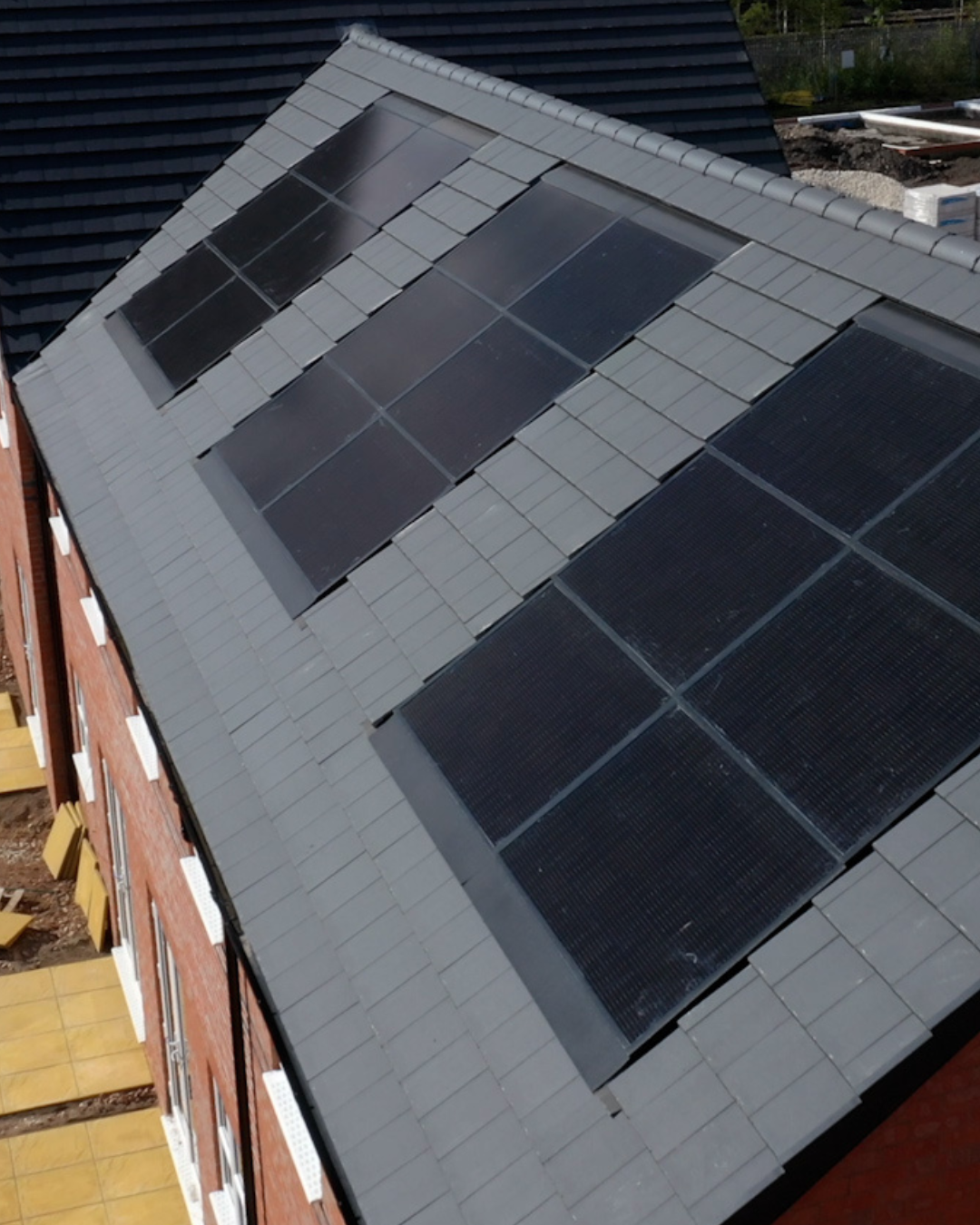
Built into the Solfit delivery framework
Technology alone does not create consistency across a housing development. The architecture has to move from specification into site delivery in a controlled and repeatable way.
Solfit’s solution-led framework turns specification into consistent site delivery through:
- System design
- Contractor training and enablement
- Compliance oversight
- Digital installation auditing
- Evidence capture
- Certification alignment
- Homeowner handover
- Warranty and assurance support
- Ongoing technical support
This brings the technical architecture and the delivery process together rather than leaving roofing, solar, electrical systems, storage, certification and handover as separate workstreams.
One coordinated renewable energy framework
For housebuilders, the opportunity is bigger than choosing a different inverter.
It is about creating a standardised, solution-led renewable energy framework that can be defined at house-type stage and then applied consistently across sites and developments.
Solfit brings roof integration and new-build delivery together with ATMOCE’s AC technology architecture, allowing the different elements of the system to be considered as part of one coordinated approach.
This brings together
- Roof-integrated solar
- Electrical architecture
- Solar generation
- Battery storage
- Monitoring and energy management
- Installation methodology
- Compliance and evidence
- Certification and assurance
- Homeowner handover
- Long-term support
The result is a clearer route from specification to completed home, with fewer disconnected interfaces between technology, trades and delivery processes.
Technology and delivery, brought together
ATMOCE AC architecture
Solfit new-build framework
Panel-level conversion:
Microinverters convert power from DC to AC at each solar module.
Microinverters convert power from DC to AC at each solar module.
System design:
Architecture defined alongside the roof and house-type specification.
Architecture defined alongside the roof and house-type specification.
Roof-level electrical architecture:
Minimises roof-level DC voltage and site-made DC connections.
Minimises roof-level DC voltage and site-made DC connections.
Installation:
Contractor training, enablement and defined installation methodology.
Contractor training, enablement and defined installation methodology.
Energy storage:
AC-coupled extra-low-voltage battery storage.
AC-coupled extra-low-voltage battery storage.
Assurance:
Digital installation auditing and evidence capture.
Digital installation auditing and evidence capture.
Monitoring:
Panel-level monitoring and digital energy management.
Panel-level monitoring and digital energy management.
Compliance:
Certification alignment and compliance oversight.
Certification alignment and compliance oversight.
Flexibility:
A modular architecture that can support changing household energy requirements.
A modular architecture that can support changing household energy requirements.
Handover and support:
Homeowner handover, warranty and assurance support, and ongoing technical support.
Homeowner handover, warranty and assurance support, and ongoing technical support.
Designed for compliance and repeatable delivery
Renewable electricity generation is becoming a defined part of the new-home specification.
Changes to the Building Regulations in England introduce a new functional requirement for on-site renewable electricity generation in new dwellings, coming into force on 24 March 2027, subject to transitional arrangements.
That increases the importance of defining renewable energy systems earlier — alongside roof design, electrical architecture, compliance and delivery.
Solfit’s approach is designed to support:
- Early house-type specification
- Coordinated roof and electrical design
- Repeatable system configurations
- Consistent installation methodology
- Digital evidence capture
- Certification alignment
- Controlled handover
- Consistency across plots, sites and regions
The aim is not simply to specify renewable technology, but to create a route for delivering it consistently at scale.
Bring AC architecture into your next development
Whether you are at early specification stage or reviewing the renewable energy strategy across an existing development, our team can help define how the AC architecture fits within your house types and delivery requirements.


